Summary: Choosing an agricultural chemical supplier is about more than price per gallon. Farms should evaluate certifications and documentation, delivery reliability, bulk pricing transparency, storage and handling support, testing and technical guidance, and emergency-order capability before signing on with a supplier.
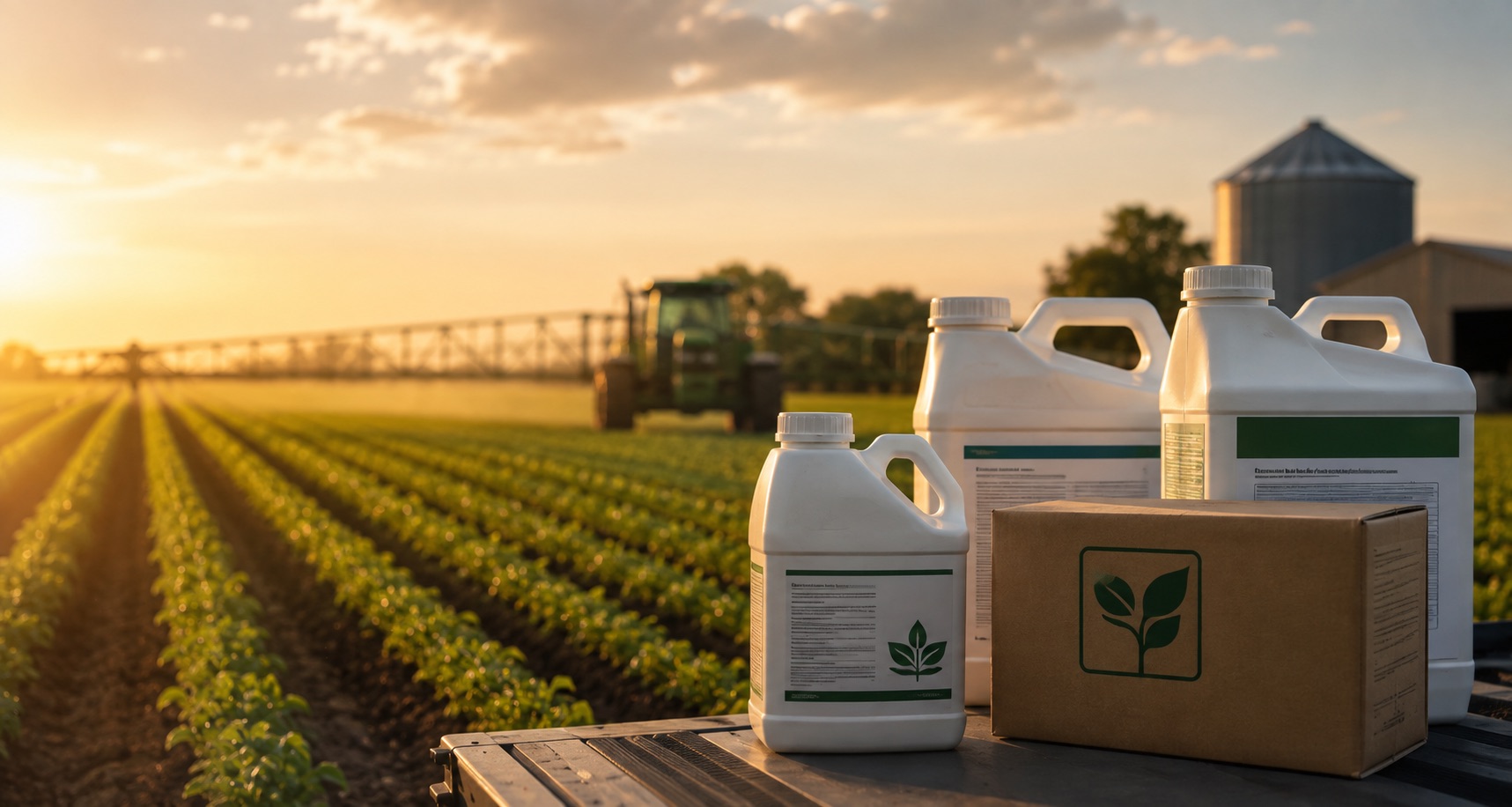
Every farm depends on a steady, correctly specified supply of agricultural chemicals—algaecides for ponds and waterways, disinfectants for equipment and facilities, biofilm removers for waterlines, and pH-adjusting acids for livestock water. When a supplier falls short on documentation, delivery timing, or technical support, the cost shows up later: in downtime, in compliance headaches, or in a treatment program that never quite works as intended.
Before you choose—or renew a contract with—an agricultural chemical supplier, here’s what to ask.
Why Your Agricultural Chemical Supplier Matters
Agricultural operations run on tighter margins and tighter timelines than most industries. A late delivery during planting season, an under-documented product that fails an inspection, or a chemical that isn’t labeled for your specific application can cost far more than the product itself. The right supplier acts as a partner in your operation’s water quality, sanitation, and compliance—not just a vendor who ships product.

Key Questions to Ask Before You Choose a Supplier
Does the Supplier Carry the Right Certifications and Documentation?
Any agricultural chemical you bring onto your operation should come with a Safety Data Sheet (SDS), a Certificate of Analysis, and clear labeling of EPA and/or NSF registration where applicable. For products used around potable water or livestock—like biofilm removers or waterline treatments—NSF certification confirms the product is safe for that use. Ask your supplier to provide this documentation up front, not after you’ve asked twice.
Can They Deliver on Your Farm’s Schedule?
Agricultural chemical needs are seasonal and often urgent—algae blooms don’t wait for a supplier’s next scheduled shipment. Ask about typical lead times, delivery radius, and whether the supplier operates its own fleet or relies on third-party freight. A supplier with owned trucks and regional manufacturing or distribution points can generally offer more flexibility when your timeline shifts.
Do They Offer Bulk Pricing and Transparent Costs?
Bulk buying should lower your cost per unit, but only if the pricing is transparent. Ask for delivered pricing that includes freight, not just a per-gallon or per-pound quote that leaves out accessorial charges. Compare cost per unit of active ingredient, not just price per container, since concentration varies between suppliers and products.
What Storage and Handling Support Do They Provide?
Not every farm has the same storage capacity or infrastructure. A good supplier will help you match order volume and container type to what you can safely store and handle on-site, and should be able to advise on compatible storage materials, ventilation, and handling precautions for each chemical.
Can They Help with Testing and Technical Support?
Water and treatment needs vary by operation, season, and source water. Suppliers who offer agricultural testing services or technical support can help you dose correctly from the start, rather than leaving you to guess or over-apply. This matters especially for pH control and algaecide treatment, where the right rate depends on your specific water conditions.
What Happens When You Need an Emergency Order?
Ask directly: what happens if you run low mid-season or discover a problem that needs immediate treatment? A supplier without rapid-response or emergency delivery capability can leave your operation exposed during exactly the moments when timing matters most.

Agricultural Chemical Supplier Checklist
| Question | Why It Matters | Red Flag to Watch For |
|---|---|---|
| Can you provide an SDS, COA, and registration info for every product? | Confirms legal use, proper handling, and inspection-readiness | Vague answers or documentation provided only after repeated requests |
| What’s your typical lead time and delivery radius? | Determines whether they can meet seasonal application windows | No clear answer, or lead times that don’t match your planting/treatment calendar |
| Is pricing delivered, or does it exclude freight and fees? | Affects your true cost per unit | Reluctance to quote an all-in, delivered price |
| Can you help size my order to my storage capacity? | Prevents over-ordering, degradation, or unsafe storage | Pushing volume discounts without asking about your storage setup |
| Do you offer testing or technical support? | Ensures correct dosing and treatment outcomes | No technical resources beyond the product listing |
| What’s your process for emergency or rush orders? | Protects your operation when timing is critical | No emergency service, or unclear escalation process |
Common Agricultural Chemicals to Ask Your Supplier About
- Algaecides — EPA- and NSF-registered products for controlling algae in ponds, streams, and reservoirs used for irrigation or livestock water.
- Farm disinfectants — Formulated for sanitizing service trucks, equipment, cages, and worker boots to limit disease spread between sites.
- Biofilm removers — NSF-certified treatments that clear biofilm from waterlines, important anywhere the water is used for drinking or potable applications.
- pH-adjusting acids — Organic and inorganic acid options for controlling drinking water pH in poultry and livestock operations.
How Water Solutions Unlimited Supports Farms
WSU has supplied agricultural operations for more than 35 years from three Midwest manufacturing locations in Camby, IN; East Peoria, IL; and Jackson, MI. Our own delivery fleet means we control timing instead of depending on third-party freight, and our team can help match product selection, dosing, and storage to your operation—not just fill an order. We supply EPA- and NSF-registered agricultural chemicals, including algaecides, farm disinfectants, biofilm removers, and pH control acids, backed by agricultural testing services and equipment support.
FAQ: Choosing an Agricultural Chemical Supplier
What certifications should an agricultural chemical supplier have?
Look for EPA registration on regulated products like algaecides, and NSF certification for anything used around potable water or livestock drinking water. Ask for a Safety Data Sheet and Certificate of Analysis for every product you order.
How do I compare pricing between suppliers?
Ask for a delivered price that includes freight and any accessorial fees, then compare cost per unit of active ingredient rather than price per container, since concentrations differ between products and suppliers.
Why does a supplier’s delivery fleet matter?
Suppliers with their own trucks and regional facilities typically offer more flexibility and faster response than those relying entirely on third-party freight—important when treatment needs are seasonal or urgent.
Can a supplier help me figure out the right chemical for my operation?
A supplier with technical support and testing services can help you select the right product and dosing based on your specific water conditions, rather than leaving you to guess.
What should I do if I need chemicals faster than a standard delivery window?
Ask any prospective supplier about their emergency or rush-order process before you need it, so you know what to expect if a treatment issue comes up mid-season.
Should I switch suppliers if mine can’t answer these questions?
If a current supplier can’t provide documentation, transparent pricing, or a plan for urgent orders, it’s worth requesting a trial order from an alternative supplier before committing to a larger contract.
Contact WSU today to talk through your farm’s agricultural chemical needs. Call (800) 359-3570 or Order Now.
Explore our full agricultural chemical selection.